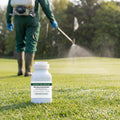
100g & 500g Systemic Turf Fungicide, 500 g/kg Azoxystrobin – Controls 7 Key Turf Diseases
A broad-spectrum systemic strobilurin fungicide containing 500 g/kg azoxystrobin, for use on managed amenity turf. It controls Anthracnose, Brown Patch, Fairy Rings (Type 2), Melting Out, Microdochium, Rust and Take-All Patch, and can be applied up to 4 times a year at 0.5 kg/ha. Use it preventatively or as an anti-sporulant – its upward movement through the plant gives effective, long-lasting protection.
Key Features
- Controls Anthracnose, Brown Patch, Fairy Rings (Type 2), Melting Out, Microdochium, Rust and Take-All Patch
- Broad-spectrum systemic strobilurin fungicide – 500 g/kg azoxystrobin
- Can be applied preventatively when conditions suit the target disease
- Also works as an anti-sporulant, stopping an active infection from spreading further
- Upward systemic movement through the plant gives effective, long-lasting protection
- Up to 4 applications a year at 0.5 kg/ha
- 100 g pack treats 0.2 ha; 500 g pack treats 1 ha
Target Diseases and Pathogen Triggers
| Pathogen | Temperature | Moisture | Nutrition | Sward | Other |
|---|---|---|---|---|---|
| Anthracnose | - | Drought stress; poor drainage | Low fertility | Excessive thatch | Close mowing; excessive traffic |
| Brown patch | > 21°C | Surface humidity; extended periods of leaf wetness | Excess N; deficient P; deficient K | ||
| Fairy rings (Type 2) | Hydrophobic residues; drought | Deficient N | Infrequent aeration | ||
| Melting out | 10-21°C | Leaf wetness | Excess N | Thatch build-up; close mowing | Shaded areas |
| Microdochium | < 15°C | Waterlogged soil; surface humidity | Low K | Excessive foliar growth; thatch build-up | Heavy traffic |
| Rust | Extended leaf wetness; drought stress | Deficient N | Low light intensity; infrequent mowing | ||
| Take-all patch | < 21°C | Wet weather; poor drainage; over-irrigation | Excessive N | Excessive thatch | Low mowing heights |
How to Use
| Maximum treatments | Application interval | Max individual dose | Water volume | Application method |
|---|---|---|---|---|
| 4 per annum | 2 weeks (minimum) | 0.5 kg/ha | 125 - 1000 L/ha | Boom or knapsack |
When to apply: at any time of year when conditions favour disease development (see the trigger points above). Best results come from applying it as a preventative treatment at the very first signs of disease symptoms.
Boom spraying (vehicle-mounted hydraulic sprayer)
- Fill the spray tank half way with water
- Start the agitation
- Add the required quantity of fungicide to the tank
- Top up the tank to full
- Keep agitating until spraying is finished
Spot treatment (knapsack or hand-held sprayer)
- Fill the spray tank half way with clean water
- Add the required quantity of fungicide to the tank
- Top up to full and mix well
- Use straight away
Additional information
- Avoid spray drift onto neighbouring areas
- Do not apply to frozen ground or during drought
- Direct spray from horizontal boom sprayers must not fall within 5 m of the top of the bank of a waterbody, unless a LERAP allows a narrower buffer zone
Applications
For use on managed amenity turf: frequently mown, intensively managed turf areas, including all kinds of sports turf, golf greens, tees and fairways.
Specifications
| Product type | Fungicide |
| Active substance | 500 g/kg azoxystrobin |
| Formulation | Water-dispersible granule |
| Areas of use | Managed amenity turf |
| Amateur/Professional | Professional |
| Role in protection | Preventative & anti-sporulant |
| Phytomobility | Acropetal penetrant |
| Mode of action group | QoI fungicide |
| Pack sizes | 100 g (treats 0.2 ha), 500 g (treats 1 ha) |
About the Active Substance: Azoxystrobin
- Biochemical mode of action: azoxystrobin is a QoI (Quinone outside Inhibitor) fungicide. QoIs stop the pathogen producing energy by blocking electron transfer.
- Mobility: as an acropetal penetrant, it diffuses through the leaf cuticle after application and is then carried upwards through the plant in the xylem (the water-conducting tissue). Its speed of movement depends on water potential, so it reaches the leaf tips faster in conditions that also encourage rapid transpiration.
- Application timing: it works best applied preventatively when disease risk is high but no symptoms are yet visible on the leaf. It can also be used while the pathogen is active, as an anti-sporulant to limit further spread.
- Resistance: QoI fungicides act on a single biochemical site in the fungal cell, so one mutation at that site can lead to resistance. They must be alternated with products that have a different mode of action, and using them preventatively at the earliest stage of disease also helps lower the risk of resistance.
Notes: Safe Use of Pesticides
- This is a professional pesticide product.
- Purchasers and/or end users are responsible for making sure the product is used in accordance with the industry Approved Codes of Practice.
- All operators must be trained and certificated to use and apply Ministry Approved professional products.
- The end user must comply with the Code for the Safe Use of Pesticides: by law, anyone using pesticides professionally must have received adequate training in safe pesticide use and be skilled in the work they are doing.